
Agentic AI is rapidly moving from pilot programs to executive agendas across the Life Sciences industry. What once felt exploratory is now a directive: “We need agentic AI embedded across R&D, clinical, regulatory, and commercial functions.”
The urgency is real.
Agentic AI systems capable of autonomous reasoning, decision support, and action, has the potential to transform how we discover therapies, design trials, manage regulatory submissions, support commercial excellence and engage patients and providers.
But amid the momentum, a more strategic question is emerging:
How should Life Sciences organizations approach agentic AI, build it, buy it, or rethink the question entirely?
This is not just a technology choice. It is a decision that touches risk, compliance, innovation speed, and ultimately, patient outcomes.
The Case for Building: Control, IP Protection… and Hidden Risk
In Life Sciences, the instinct to build is particularly strong. And for good reason:
-
Our data is highly sensitive and regulated (GxP, HIPAA, GDPR).
-
Our scientific knowledge and trial designs are core intellectual property.
-
We require auditability, transparency, and traceability in decision-making.
-
We cannot risk black-box systems influencing regulated processes.
These aren’t preferences, they’re obligations.
However, building agentic AI in this context is fundamentally different from building traditional platforms or even earlier AI solutions. It requires continuous investment in:
-
Evolving reasoning and decision frameworks aligned to scientific rigor
-
Agent orchestration across complex, regulated workflows (clinical, regulatory, safety)
-
Memory systems with full audit trails and explainability
-
Alignment with rapidly changing foundation models under strict validation requirements
This is not a “build once, deploy everywhere” model. It is a continuous validation and evolution cycle, closer to maintaining a living system than shipping software.
The critical leadership question is:
What happens if we spend several months or years building compliant, internal agentic capabilities, only to find the underlying technology paradigm has shifted?
In Life Sciences, this risk is amplified. Delays don’t just impact efficiency, they can affect time-to-market, patient access, and ultimately brand success.
The Case for Buying: Speed to Value… and Compliance Trade-offs
Commercial solutions offer an attractive alternative: speed.
Organizations can deploy agent-enabled solutions in weeks, supporting use cases like:
-
Clinical trial site selection and feasibility
-
Data governance & fraud detection
-
Brand launch monitor & intelligence
-
Promotional effectiveness insights and field enablement
This matters because the value of agentic AI is best realized through real-world application, not theoretical models.
But buying in Life Sciences introduces unique constraints:
-
Limited transparency into how outputs are generated (a challenge for regulated environments)
-
Dependence on vendor validation approaches and compliance readiness
-
Difficulty integrating with validated systems and proprietary data ecosystems
-
Risk of solutions that appear “intelligent” but do not meet Life Sciences specific standards
Here, the biggest danger is not failure, it is premature trust in horizontal systems that have not been fully validated for Life Sciences specific use.
A More Viable Path: Build for Control, Leverage for Speed
Leading Life Sciences organizations are increasingly moving toward a more Blend/Hybrid model.
Instead of asking build or buy, they are asking:
Where must we maintain control, and where can we safely accelerate through partnerships?
In practice, this often looks like:
-
Core agent frameworks, foundation models, and data governance & security layers, are built internally
-
Business use cases and outcome driven agents & orchestration layers, are brought as add-ons from external platforms or partners
This approach reflects a critical shift in thinking:
Differentiation in agentic AI will come less from model development, and more from how agents reason within your unique business context.
The goal isn’t perfection. It’s learning velocity.
Organizations that succeed will be those that learn:
-
Where agentic autonomy can be trusted in regulated workflows
-
Where human oversight must remain deeply embedded
-
How to validate, monitor, and continuously govern AI-driven decisions
Winning will depend less on having the most advanced agentic system, and more on building the capability to adapt, validate, and scale responsibly.
This Is Ultimately a Leadership Decision
At its core, the agentic AI conversation isn’t about tools.
It’s about leadership:
- How much uncertainty is the organization willing to absorb?
- How do we balance innovation with operational resilience?
- Do we treat AI as a fixed asset, or as a continuously evolving capability?
- How do we build organizational confidence in AI partner systems that will ensure critical outcomes?
The greatest risk isn’t choosing the wrong path.
The greatest risk is waiting for clarity in a space that won’t slow down to provide it.
Where does your organization stand on the build–buy–blend spectrum?
Frequently Asked Questions
Quick answers to common questions related to this blog.
Recommended Blogs
More perspectives and insights you may find useful.
CustomerInsights.AI Makes It to the Inc. 5000 List, Two Years in a Row
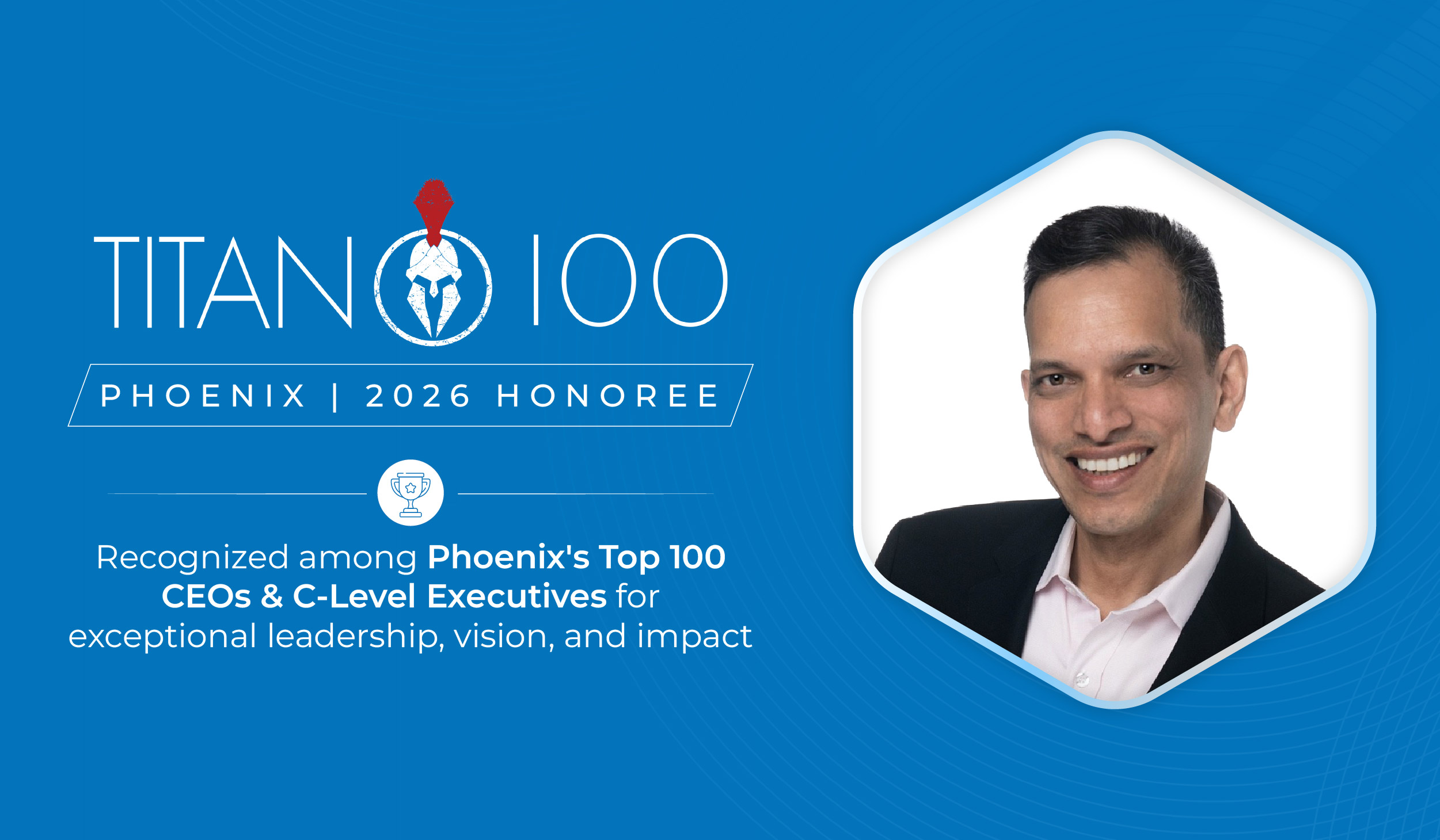
CustomerInsights.AI Founder & CEO Abhay Jajoo Named a 2026 Phoenix Titan 100 Honoree